Dili, 15 June 2026 – The Minister of Commerce and Industry, Nino Pereira, participated in the plenary discussion and general voting session on Proposal for Law No. 18/VI (2nd Code) on the Industrial Property Code, held at the National Parliament on Monday (15/06).
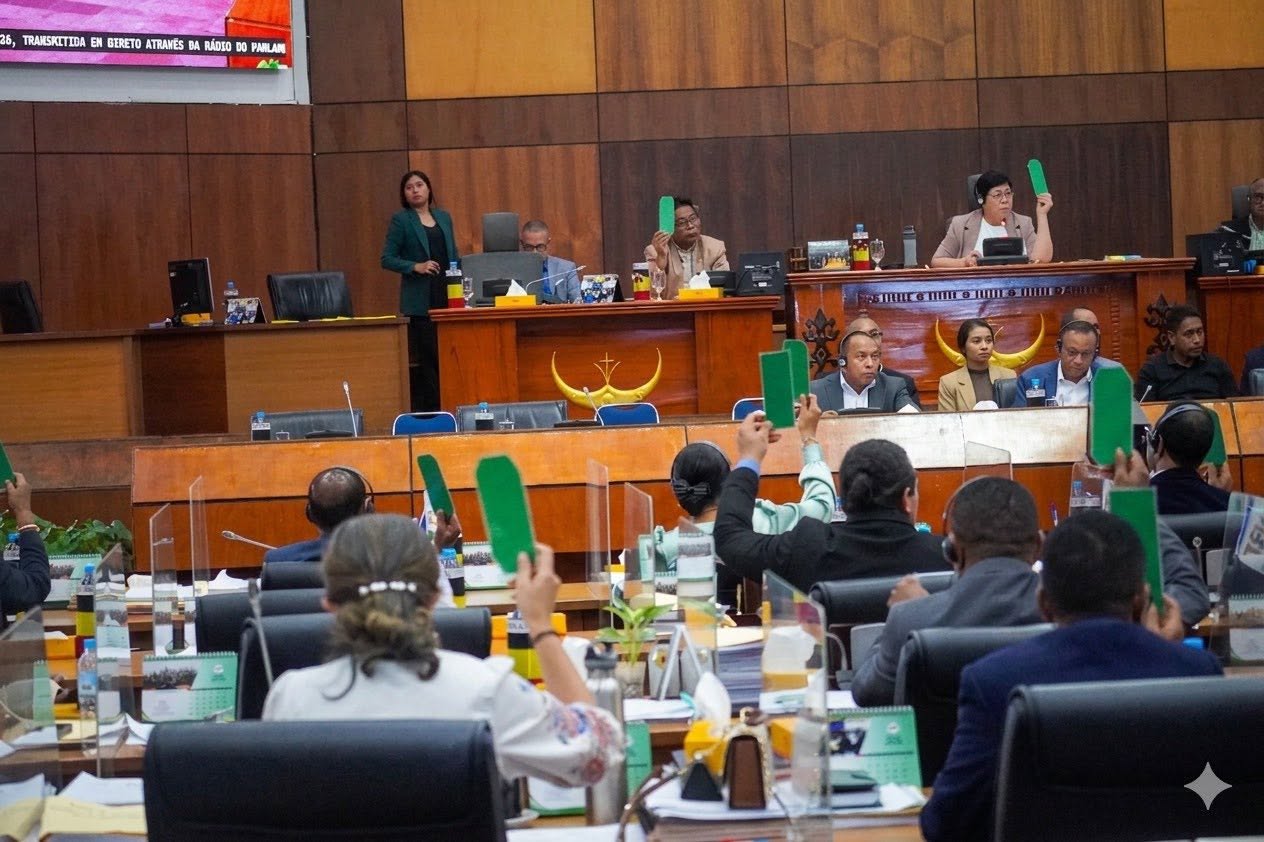
During the session, the National Parliament approved the proposed legislation in its general phase, with a vote of 44 voted in favor, 0 against, and 16 abstentions.
Comprising 203 articles, the Industrial Property Code seeks to modernize Timor-Leste’s national legal framework for intellectual property protection, particularly in relation to patents, trademarks, and innovation. The legislation is designed to align the country’s regulatory system with international standards and obligations under the World Trade Organization (WTO) and regional frameworks, including ASEAN. The initiative is widely regarded as a strategic instrument for promoting economic diversification, strengthening innovation ecosystems, and safeguarding traditional knowledge. At the same time, civil society organizations have highlighted the importance of ensuring greater transparency and public participation throughout the legislative process.
The proposed legislation underscores the critical role of intellectual property, particularly industrial property rights, in fostering innovation and economic development. By providing legal protection and economic incentives to creators, inventors, and entrepreneurs, the Industrial Property Code aims to encourage innovation, investment, and the commercialization of new ideas. The approval of the bill therefore represents a significant milestone in strengthening Timor-Leste’s legal and institutional framework for intellectual property governance.
The draft Industrial Property Code was developed through extensive collaboration with the World Intellectual Property Organization (WIPO), which provided technical expertise and recommendations to ensure compliance with international standards while safeguarding national interests. The European Patent Office (EPO) also contributed valuable input, particularly regarding patent-related provisions, reflecting Timor-Leste’s commitment to establishing an effective, modern, and internationally recognized intellectual property system.
With the approval of the Industrial Property Code in its general phase, Timor-Leste is better positioned to fulfill its commitments under the WTO and to advance preparations for future regional and international economic integration processes, including accession to ASEAN and the Interim Economic Partnership Agreement (iEPA).
Prior to the plenary deliberation, the Ministry of Commerce and Industry (MCI), together with relevant state institutions including AIFAESA, SERVE, the Institute for Quality of Timor-Leste (IQTL), and the Customs Authority, held consultations with Commission D of the National Parliament. During these engagements, MCI emphasized that the proposed legislation is intended to strengthen investor and business confidence, foster a transparent and predictable business environment, promote sustainable economic development, continuously improve the living standards of the population, and enhance consumer welfare.
The plenary session was chaired by the President of the National Parliament, Maria Fernanda Lay, and attended by the Minister of Commerce and Industry, Nino Pereira, accompanied by his advisers and technical team, as well as the Vice Minister for Parliamentary Affairs, Adérito Hugo da Costa.
Média MCI